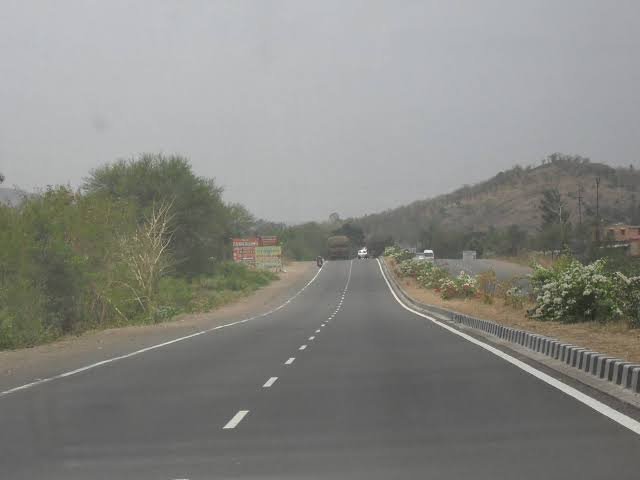
Starting almost literally at the India-Pakistan border and ending nearly 1,000 km later in the high-altitude desert of Ladakh, NH 3 might be the most geographically varied highway in this entire series. It begins at Attari in Punjab, runs through the plains of Punjab and the hill stations of Himachal Pradesh, crosses the legendary Rohtang region via the Atal Tunnel, and finally climbs into Ladakh to reach Leh — covering three dramatically different landscapes in a single highway designation.
Here’s the complete, accurate breakdown of NH 3’s route, length, road conditions, and rules for anyone planning to travel this corridor.
NH 3 Quick Facts
| Detail | Information |
| Starting point | Attari, Punjab (near the India-Pakistan border) |
| Ending point | Leh, Ladakh |
| Total length | Approximately 990 km |
| States/UT covered | 3 — Punjab, Himachal Pradesh, Ladakh |
| Maintained by | NHAI (Punjab/HP stretch); Border Roads Organisation (Manali-Leh section) |
| Key infrastructure | Atal Tunnel (9.02 km, bypasses Rohtang Pass) |
| Highest point | Rohtang Pass area, 3,978 m (bypassed for most traffic via Atal Tunnel) |
| Manali to Leh distance | Around 430 km (shortened from 474 km after the Atal Tunnel opened in 2020) |
| Speed limit | 100 km/h on plains sections; 40 km/h inside Atal Tunnel; much lower on mountain stretches |
| Typical travel time (Manali-Leh) | 2 days, with an overnight halt recommended |
Where NH 3 Begins and Ends
NH 3 starts at Attari in Punjab, right at the Wagah-Attari border crossing point with Pakistan, and ends at Leh in Ladakh — a journey that takes travellers from the flat agricultural plains of Punjab all the way to one of the highest inhabited regions in the world. It’s a highway of genuine contrasts: the first several hundred kilometres are smooth, fast, and entirely unremarkable in terms of terrain, while the final stretch through Himachal Pradesh and into Ladakh becomes one of India’s most demanding — and most photographed — mountain drives.
The Route Through Three Regions
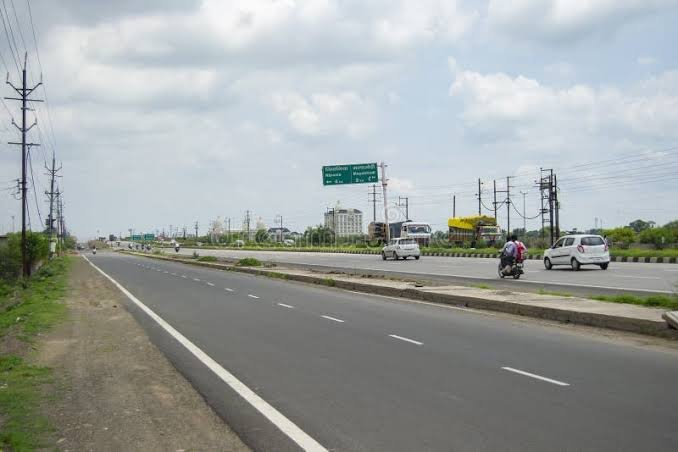
Leaving Attari, NH 3 passes through Amritsar, Jalandhar, and Hoshiarpur in Punjab — a well-developed, largely flat stretch that carries significant regular traffic given how many major Punjab towns sit directly on this corridor. This portion functions as an ordinary, fast national highway with none of the drama associated with the rest of the route.
Entering Himachal Pradesh, the highway climbs through Nadaun, Hamirpur, Sarkaghat, Mandi, and Kullu before reaching Manali — the last major town before the high-altitude stretch begins. From Manali, NH 3 historically climbed over Rohtang Pass at 3,978 metres, one of the most challenging and weather-dependent sections of any Indian highway.
That’s changed significantly since 2020. The Atal Tunnel, a 9.02-km all-weather tunnel cutting through the Pir Panjal range, now allows most traffic to bypass Rohtang Pass entirely, connecting Manali to the Lahaul valley in roughly two hours instead of the much longer, weather-dependent route over the pass. Past the tunnel, the highway continues through Sissu, Tandi, Keylong, and Sarchu before entering Ladakh and reaching Leh.
The Atal Tunnel: What Changed and Why It Matters
Before 2020, reaching Ladakh via Manali meant crossing Rohtang Pass — a route notorious for landslides, snow closures, and traffic chaos during peak season. The Atal Tunnel changed that fundamentally. At 9.02 km, it’s built at roughly 3,060 metres and connects Manali’s south portal to Lahaul’s north portal, cutting the Manali-Leh distance from 474 km down to about 430 km and making the Lahaul valley accessible essentially year-round rather than only during the short pass-open season.
Inside the tunnel, the speed limit is strictly enforced at 40 km/h, and headlights are mandatory. Filming with helmet cameras inside is not permitted. Queue patterns shift by season — the south portal (Manali side) tends to see more congestion than the north portal, particularly through peak summer months.
Road Conditions Beyond the Tunnel
Once past Lahaul, the highway continues through genuinely remote terrain. According to recent route assessments, roughly 350 km of the approximately 430-km Manali-Leh stretch has no significant civilization along the way, and fuel isn’t available for nearly 345 km between Tandi and Karu. This is not a stretch to attempt without proper planning — carrying extra fuel, water, and basic supplies is standard practice for this route, not an exaggerated precaution.
Road quality varies considerably: the Manali-to-Atal Tunnel south portal stretch is generally good to very good, the tunnel itself is excellent given its all-weather design, but conditions beyond Sissu can range from average to genuinely rough depending on season and recent weather. Checking real-time road status through official Lahaul-Spiti and Leh district channels before departure is strongly advised given how quickly conditions can change at this altitude.
Speed Limits and Safety on NH 3
The Punjab plains stretch follows standard national highway limits — up to 100 km/h for cars on open sections. This changes dramatically once the highway enters Himachal Pradesh’s hill terrain, where sharp turns, narrow sections, and altitude gains make consistent high-speed driving both impractical and unsafe. Inside the Atal Tunnel specifically, 40 km/h is strictly enforced given the confined, tunnel-bound conditions.
Beyond the tunnel toward Leh, mountain driving conditions dominate — overspeeding on these stretches, given sharp twists and turns at high elevation, carries genuinely serious risk, and most guidance for this route emphasizes driving to conditions rather than to any posted number.
Challan and Compliance Notes
Standard Motor Vehicles Act fine structures apply across all three regions this highway passes through, with typical overspeeding penalties in the ₹1,000-₹4,000 range depending on vehicle category, though Punjab, Himachal Pradesh, and Ladakh each set their own specific rates within the central framework. Given how much of this route runs through remote, sparsely monitored terrain, practical safety considerations matter considerably more than formal enforcement on the mountain sections — the Rohtang and post-tunnel stretches, in particular, see limited camera-based enforcement compared to the Punjab plains portion.
FAQs
Q1. Do I still need to cross Rohtang Pass to reach Leh from Manali?
No, not anymore. Since the Atal Tunnel opened in 2020, most traffic bypasses Rohtang Pass entirely, cutting travel time to Lahaul significantly and making the route accessible for much longer stretches of the year than the old pass-dependent road allowed.
Q2. How much fuel should I carry for the Manali-Leh stretch of NH 3?
Plan carefully — there’s no fuel available for roughly 345 km between Tandi and Karu. Fill up completely at Tandi before continuing, and carry extra fuel in approved containers if you’re travelling by two-wheeler, since running short in this stretch means a genuinely difficult situation with no nearby options.
Q3. Is the entire NH 3 route open year-round?
The Punjab and lower Himachal stretches are open year-round. The high-altitude Manali-Leh section, even with the Atal Tunnel improving access to Lahaul, still faces seasonal closures further along toward Leh due to snow and weather, so checking current district-level road status before travel remains essential regardless of the tunnel’s benefits.
Q4. What’s the safest way to plan the Manali-to-Leh drive specifically?
Break the journey into multiple days rather than attempting it in one push, given the remoteness and altitude involved. Most experienced travellers recommend overnight halts along the way — commonly around Jispa or Keylong — to acclimatize gradually rather than ascending too quickly to Leh’s altitude.