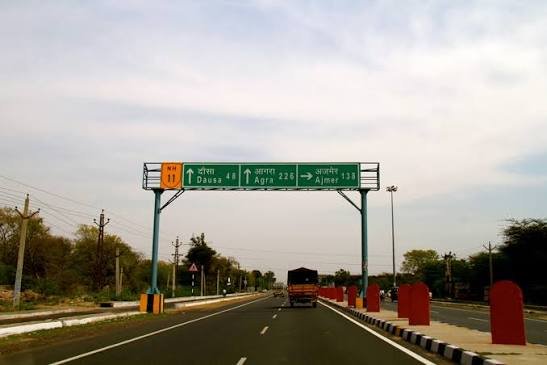
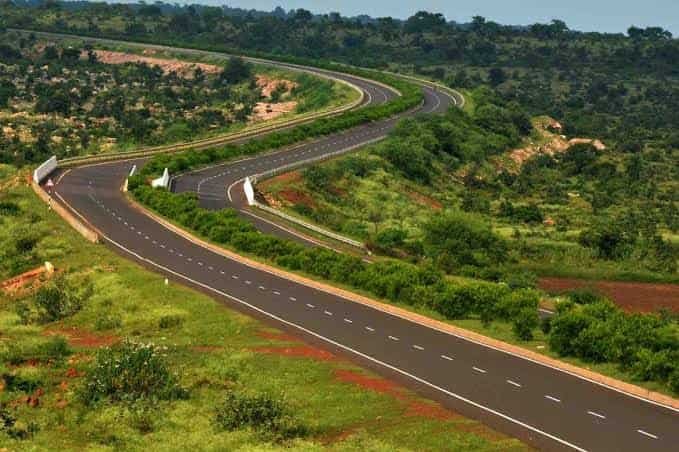
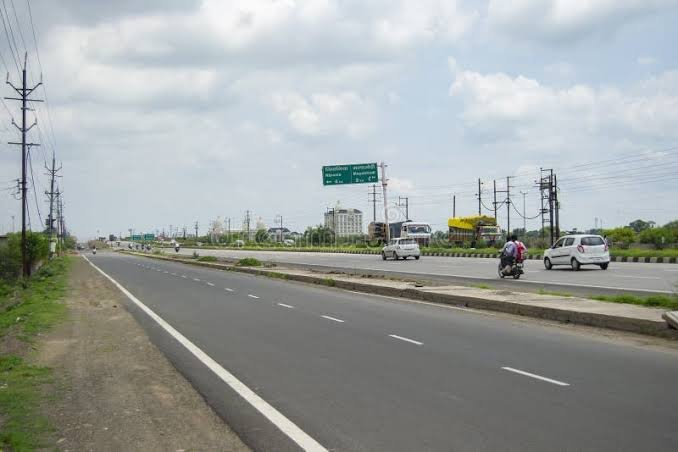
Officially named the Jawaharlal Nehru Outer Ring Road, this 158-km, eight-lane expressway is genuinely one of India’s fastest urban roads, permitting speeds up to 120 km/h around the entire circumference of Hyderabad. Built at a cost of ₹6,696 crore with funding assistance from the Japan International Cooperation Agency (JICA), the ORR has fundamentally reshaped how Hyderabad grows, connects, and moves — now carrying approximately 1.6 lakh vehicles daily and generating ₹840 crore in annual toll revenue.
Here’s the complete, current picture of this genuinely transformative expressway’s route, toll structure, and its role in Hyderabad’s expansion.
Hyderabad ORR Quick Facts
| Detail | Information |
| Official name | Jawaharlal Nehru Outer Ring Road |
| Total length | 158 km |
| Lanes | 8-lane (4 each direction) |
| North end | Gachibowli |
| South end | Narsingi |
| Developed by | Hyderabad Metropolitan Development Authority (HMDA) |
| Project cost | Approximately ₹6,696 crore |
| Funding assistance | Japan International Cooperation Agency (JICA) |
| Inaugurated | Phased, 2008-2016 (some sources cite full opening 2012) |
| Speed limit | 120 km/h (increased from original 100 km/h) |
| Daily traffic | Approximately 1.6 lakh vehicles |
| Annual toll revenue | Approximately ₹840 crore |
Where the Expressway Runs
The Hyderabad Outer Ring Road forms a complete circular corridor around the city, with its route commonly referenced between Gachibowli in the north and Narsingi in the south, though it fully encircles the metropolitan area.
Key route facts:
- Total length: 158 km
- Links 5 districts around Hyderabad’s metropolitan region
- Built over approximately 6,250 acres of land
- Connects 5 national highways: NH-44, NH-65, NH-163, NH-765, and NH-765D
- More than 22 operational interchanges, with 3 more under planning
The Route Through Hyderabad’s Growth Corridors
The ORR passes through and connects some of Hyderabad’s most economically significant zones, directly shaping the city’s expansion pattern over more than a decade.
Key areas and landmarks along the route:
- HITEC City — Hyderabad’s major IT hub
- Financial District — significant commercial and corporate zone
- Patancheru — industrial belt
- Kokapet — rapidly growing real estate corridor
- Rajiv Gandhi International Airport — direct connectivity
- Chilkur Balaji Temple — historic landmark accessible via the ORR
Why This Expressway Is Genuinely Significant
Beyond simply being a ring road, the ORR represents one of India’s most successful examples of infrastructure directly driving urban and economic transformation.
Key significance points:
- Functions as a high-speed bypass, diverting non-destined traffic entirely away from Hyderabad’s city core
- Connects five major national highways, making it a genuine regional hub rather than just a city ring road
- India’s fastest urban expressway, permitting speeds up to 120 km/h
- Direct link to Rajiv Gandhi International Airport, significantly improving airport accessibility from across the metropolitan region
Toll System: How Charges Work
The ORR operates on a distance-based tolling system, calculated according to the specific stretch travelled between interchanges rather than a flat fee for the whole road.
Key toll structure details:
- Charges calculated based on distance travelled between specific interchanges
- Rates rounded to the nearest ₹10 per government guidelines
- Developed and operated under a Toll-Operate-Transfer (TOT) model by IRB Infrastructure Developers Ltd
- Return journey discount available for round trips completed within a set timeframe
- FASTag is mandatory for all vehicles using the ORR
Practical toll notes:
- Toll amounts increase with both distance travelled and vehicle size/category
- Separate rate structures apply for cars, jeeps, buses, and trucks
- FASTag can be recharged online or at designated toll plazas along the route
Vehicle Restrictions
Given its access-controlled, high-speed design, the ORR enforces specific restrictions on vehicle types permitted to use the expressway.
Key restrictions:
- Two-wheelers are not allowed
- Three-wheelers (auto-rickshaws) are not allowed
- The expressway is designed exclusively for cars, buses, trucks, and similar four-wheel-and-above vehicles capable of sustained high-speed travel
Real Estate Impact: A Genuine Growth Catalyst
Few pieces of infrastructure in any Indian city have shaped property development as directly and visibly as the ORR has for Hyderabad’s outer neighbourhoods.
Development impact:
- Has significantly boosted real estate growth in neighbourhoods along its length
- Areas like Kollur, Tellapur, and Kokapet have seen major residential project development directly tied to ORR access
- Premium projects have specifically marketed their proximity to ORR exits as a core selling point
- Continues to influence where Hyderabad’s commercial and residential expansion concentrates
Infrastructure and Interchange Network
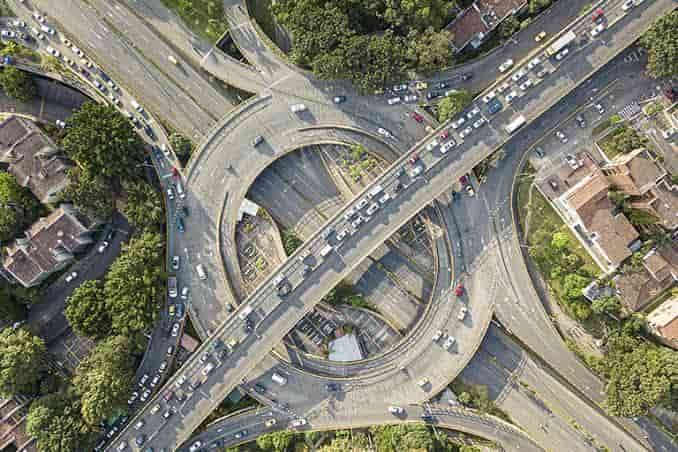
The ORR’s extensive interchange system is central to how effectively it serves as both a bypass and a connector for local traffic across the metropolitan region.
Interchange details:
- 22+ operational interchanges currently in service
- 3 additional interchanges under planning as of the latest updates
- Interchanges provide access points for major zones including HITEC City, Financial District, and Kokapet
- This dense interchange network is what allows the ORR to function simultaneously as a through-bypass and a local connector
Ongoing Traffic Growth and Revenue
Recent data shows the ORR continuing to see meaningful growth in usage, reflecting Hyderabad’s broader urban expansion.
Traffic and revenue trends:
- Approximately 1.6 lakh vehicles use the ORR daily
- Annual toll revenue stands at approximately ₹840 crore
- Traffic surge has continued to boost toll collections through 2026, per recent reporting
- This sustained growth underscores the ORR’s central role in Hyderabad’s daily transport patterns rather than being a road primarily used for occasional long-distance travel
FAQs
Q1. Is FASTag mandatory on the ORR, or can I pay toll in other ways?
FASTag is mandatory for all vehicles using the ORR. The tolling system has been streamlined specifically around electronic payment to reduce congestion at toll plazas, so ensure your FASTag is active before travelling this route.
Q2. Can I ride a two-wheeler on the Outer Ring Road to get around Hyderabad faster?
No — two-wheelers and three-wheelers are not permitted on the ORR. This access-controlled expressway is designed exclusively for cars, buses, trucks, and similar vehicles capable of sustained higher-speed travel.
Q3. How is toll actually calculated if I’m only using part of the ORR?
The ORR uses a distance-based system, meaning you pay based on the specific stretch you travel between interchanges rather than a flat fee for the whole 158-km loop. Rates are rounded to the nearest ₹10 and vary by vehicle category.
Q4. Why has real estate grown so significantly along the ORR specifically?
The combination of fast, reliable connectivity to HITEC City, the Financial District, and the airport, alongside numerous well-placed interchanges, has made ORR-adjacent areas like Kokapet and Tellapur genuinely practical for both commuting professionals and businesses — driving sustained demand and major residential project development in these corridors.