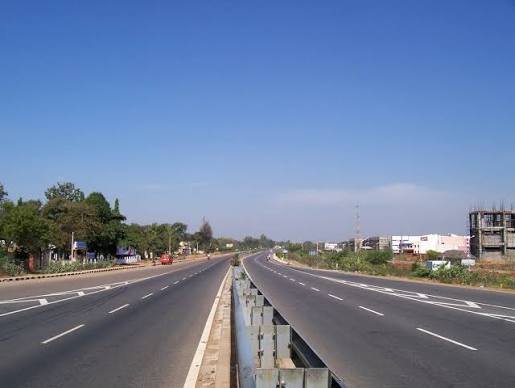
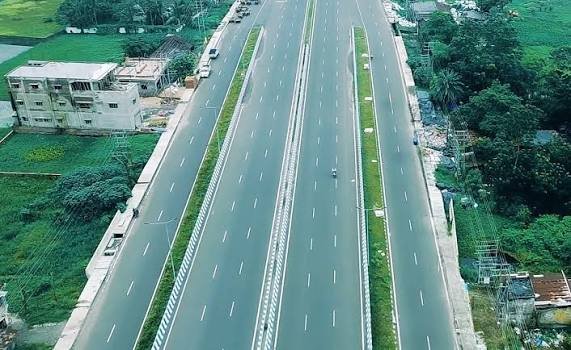
Delhi’s road network has long struggled with a fundamental geography problem — traffic bound for one side of the city has historically had no choice but to cut through the congested core to reach the other. Urban Extension Road-II, officially designated NH-344M, was built specifically to solve this, creating a peripheral corridor that keeps through-traffic moving around Delhi’s western and northern edges rather than through them.# Urban Extension Road-II (UER-II / NH-344M), Delhi, Haryana: Route, Toll, Length
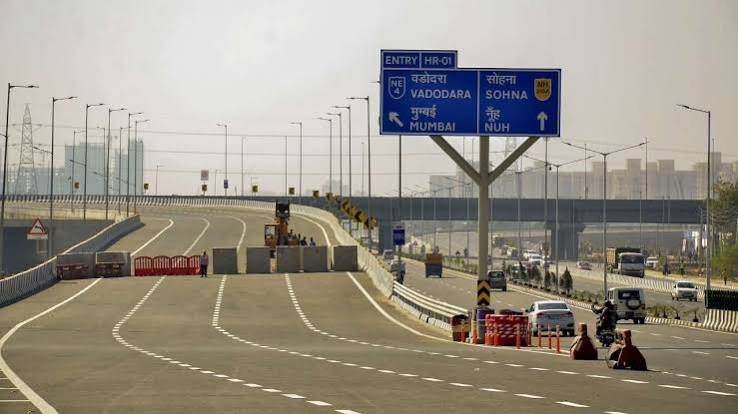
Delhi’s road network has long struggled with a fundamental geography problem — traffic bound for one side of the city has historically had no choice but to cut through the congested core to reach the other. Urban Extension Road-II, officially designated NH-344M and inaugurated by PM Narendra Modi on August 17, 2025, was built specifically to solve this. Functioning as Delhi’s third ring road, this 75.7-km access-controlled expressway lets vehicles bypass central Delhi entirely while moving between the north, northwest, west, and IGI Airport.
Here’s the complete, current picture of this genuinely transformative corridor’s route, toll structure, and its already-measurable impact on Delhi’s traffic patterns.
UER-II Quick Facts
| Detail | Information |
| Official designation | NH-344M |
| Starting point | Alipur/Bankoli, NH-44, North Delhi |
| Ending point | Mahipalpur, NH-48, near IGI Airport |
| Total length | 75.7 km (main alignment) |
| State split | Delhi: 54.21 km, Haryana: 21.5 km |
| Lanes | 6-lane main carriageway plus 6 service lanes |
| Developed by | National Highways Authority of India (NHAI), on behalf of DDA |
| Inaugurated | August 17, 2025, by PM Narendra Modi |
| Project cost | Approximately ₹7,716 crore |
| Spurs | 7.27-7.5 km to Bahadurgarh; 29.6 km to Sonipat |
Where the Expressway Begins and Ends
UER-II starts at NH-44 near Alipur/Bankoli in North Delhi and runs through the city’s western periphery before terminating near Mahipalpur at NH-48, close to IGI Airport.
Key route facts:
- Total main alignment: 75.7 km
- Functions as Delhi’s third semi-ring road, after the Inner Ring Road and Outer Ring Road
- Passes through Bawana Industrial Area, Rohini, Mundka, Bakkarwala, Najafgarh, and Dwarka
- Two significant spurs extend the network: one toward Bahadurgarh (Haryana), another toward Sonipat
The Route Through Delhi’s Western Corridor
Leaving Alipur in North Delhi, UER-II runs south through Bawana Industrial Area and Rohini before continuing through Mundka, Bakkarwala, and Najafgarh. From there, it passes through Dwarka before terminating at Mahipalpur near IGI Airport.
Construction packages along the route:
- Package 1 — NH-44 to Karala-Kanjhawala Road, 15.7 km, passing through Bawana Industrial Area and Rohini Sector 30-31
- Package 2 — Karala-Kanjhawala Road to Najafgarh-Nangloi Road, 13.45 km
- Package 3 — Najafgarh-Nangloi Road to Dwarka Sector 24, 9.66 km, including a major bridge over the Najafgarh drain
- Final stretch connects toward Shiv Murti on the Delhi-Gurugram Expressway via the Dwarka Expressway project
Why This Road Matters: Solving Delhi’s Core Congestion Problem
This is genuinely the central purpose behind UER-II, and understanding it explains why the project carries such significance for Delhi NCR’s daily traffic patterns.
The core problem it solves:
- Traffic from Sonipat, Panipat, Ambala, and Chandigarh heading toward IGI Airport, Najafgarh, or Rohtak previously had no option but to route through central Delhi
- UER-II provides a genuine bypass, keeping this traffic entirely on the city’s western periphery
- Directly decongests the Inner Ring Road, Outer Ring Road, NH-44, and NH-9
- Provides signal-free access to IGI Airport from North Delhi and Sonipat
Measurable Impact Since Opening
As of early 2026, this expressway has already shown genuine, quantifiable effects on Delhi’s traffic distribution — worth knowing if you’re deciding whether to switch your regular route.
Documented impact:
- Average daily traffic has visibly shifted away from Azadpur and Peeragarhi toward UER-II
- Multi-Lane Free Flow (MLFF) tolling has reduced congestion at the Mundka plaza by approximately 90%
- Travel time from Noida to IGI Airport via UER-II runs approximately 45-60 minutes, depending on traffic and entry point
Toll System: No Stopping Required
UER-II uses a genuinely modern, boothless tolling approach that differs from older toll plaza systems many Delhi commuters are used to.
How tolling works:
- No need to stop — the system uses ANPR (Automatic Number Plate Recognition) cameras combined with FASTag scanners
- Multi-Lane Free Flow (MLFF) technology allows continuous movement through toll zones
- Local monthly pass available for non-commercial vehicles within a 20-km radius: approximately ₹350 per month
- This system has directly contributed to the dramatic congestion reduction at plazas like Mundka
Connectivity to Delhi NCR’s Broader Highway Network
One of UER-II’s biggest strengths is how comprehensively it plugs into the existing and newer expressway network across the region.
Key connections:
- Connects to the Dwarka Expressway near the India International Convention Centre (IICC) and the IGI Airport tunnel
- Links to the Western Peripheral Expressway (KMP) and Eastern Peripheral Expressway (EPE)
- Seamlessly connects NH-1, NH-10, NH-8, and NH-2
- Spur toward Bahadurgarh connects to the Delhi-Amritsar-Katra Expressway extension via a 20-km section from Nilauthi village
- Sonipat spur (29.6 km, designated NH-344P) links Bawana Industrial Area to the NH-352A bypass near Barwasni
Future Phases: Completing the Full Ring
UER-II’s current 75.7-km stretch covers Delhi’s western periphery, but plans exist to extend this into a genuinely complete third ring road encircling the entire city.
Planned expansion:
- Phase II (IGI Airport-Vasant Kunj-Tughlakabad) — under construction
- Phase III (Tughlakabad-Okhla-Tronica City) — under construction, extending the outer mobility ring further
- Proposed 82-km eastern extension approved for DPR (Detailed Project Report) stage, running Alipur → Burari (Yamuna Bridge) → Tronica City → Mandaula (Delhi-Dehradun Expressway) → Delhi-Meerut Expressway → Noida-Greater Noida Expressway
- Once complete, this eastern extension would give Delhi a genuinely full third ring road, closing the loop around the entire city
Regional Development Impact
Beyond transport efficiency, UER-II has already begun shaping industrial and logistics development along its corridor.
Development impact:
- Industrial areas like Bawana, Mundka, and Najafgarh are seeing logistics park growth directly tied to improved connectivity
- The project incorporates eco-friendly urban development principles, including recycled materials in construction
- Plans exist for a network of e-buses, e-trolleys, and e-cars to operate along the corridor
FAQs
Q1. Do I need to stop at toll booths on UER-II, or does it work differently?
No stopping required — UER-II uses a Multi-Lane Free Flow (MLFF) system combining ANPR cameras and FASTag scanners, allowing continuous movement through toll zones. This has already reduced congestion at plazas like Mundka by roughly 90%.
Q2. Can I use UER-II to reach IGI Airport from Sonipat or North Delhi without entering central Delhi?
Yes — that’s specifically what this expressway was built for. It provides signal-free access to IGI Airport from North Delhi and Sonipat via its connection to the Dwarka Expressway, entirely bypassing Delhi’s congested core.
Q3. Is the entire ring road around Delhi complete, or just this western stretch?
Currently, only the western periphery (75.7 km from Alipur to Mahipalpur) is operational. Phases II and III, extending toward Vasant Kunj, Tughlakabad, and eventually a full eastern loop, remain under construction or in planning stages as of the latest updates.
Q4. Is there a discounted option for regular commuters using UER-II frequently?
Yes — a local monthly pass is available for non-commercial vehicles within a 20-km radius of the expressway, priced at approximately ₹350 per month, offering meaningful savings for daily commuters compared to per-trip charges.