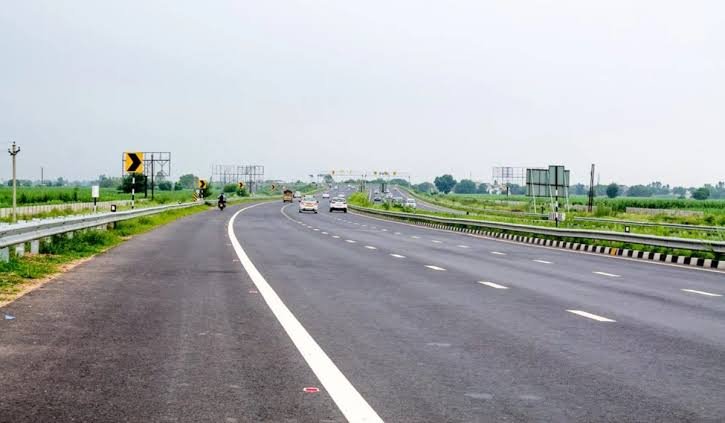
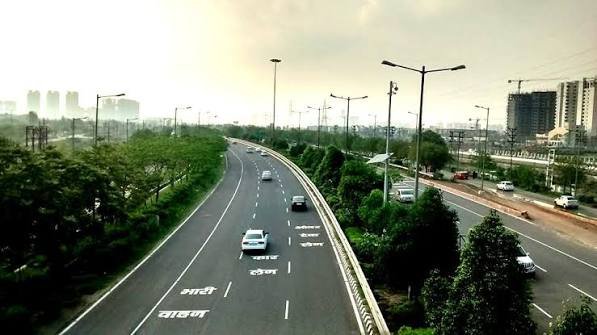
One of Delhi NCR’s earliest and most transformative expressway projects, the Noida-Greater Noida Expressway has done far more than simply connect two adjacent suburbs. Since its commissioning in 2002, this 24.53-km, six-lane corridor has turned the entire stretch it runs through into one of NCR’s most significant real estate and business hubs, home to major landmarks, universities, and IT campuses that simply wouldn’t exist in their current form without this road.
Here’s the complete, current picture of this pioneering expressway’s route, toll structure, and its ongoing role in shaping Noida-Greater Noida’s growth.
Noida-Greater Noida Expressway Quick Facts
| Detail | Information |
| Starting point | Mahamaya Flyover, Sector 16A, Noida |
| Ending point | Pari Chowk, Greater Noida |
| Total length | 24.53 km |
| Lanes | 6-lane, access-controlled |
| State | Uttar Pradesh, entirely |
| Commissioned | 2002 |
| Construction cost | Approximately ₹400 crore |
| Speed limit | 75 km/h |
| Purpose | Alternative to the old Delhi-Agra highway (NH-2) |
Where the Expressway Begins and Ends
The Noida-Greater Noida Expressway starts at Mahamaya Flyover in Sector 16A, Noida, and runs to Pari Chowk, the gateway junction to Greater Noida.
Key route facts:
- Total length: 24.53 km
- Connects Noida, an established industrial suburb of Delhi, to Greater Noida, a newer planned satellite city
- Designed specifically as an alternative route to the older, more congested Delhi-Agra highway (NH-2)
- At Pari Chowk, connects directly to the Yamuna Expressway, extending onward toward Agra
The Route Through Noida’s Key Sectors
Leaving Mahamaya Flyover, the expressway runs through a dense sequence of Noida sectors before reaching Greater Noida.
Sectors and areas connected along the route:
- Sector 18, 44, 45, 82, 93, 94, 96, 100, 105, 108, 110, 124, and 125
- Notable landmarks: Amity University, Jaypee Hospital, India Expo Mart, Buddh International Circuit, Noida Golf Course
- Botanical Garden Metro Station sits nearby, offering multi-modal connectivity
Why This Expressway Matters: A Genuine NCR Growth Engine
This corridor’s significance extends well beyond simple transport function — it has directly shaped how an entire region of Delhi NCR developed over more than two decades.
Key impact points:
- Transformed the entire corridor into a thriving real estate and business hub
- Created over 10,000 jobs during the construction phase alone
- Supports IT, BPO, and service-based industries given its high-speed internet infrastructure and proximity to Delhi
- Home to India Expo Mart and Buddh International Circuit, both significant commercial and sporting venues
- Toll plazas along the route generate significant revenue for the state government
Connectivity to Delhi NCR’s Broader Network
The Noida-Greater Noida Expressway functions as a genuine hub, connecting to several other major roads and expressways across the region.
Key connections:
- Yamuna Expressway — direct connection at Pari Chowk, extending toward Jewar, Mathura, and Agra
- Noida-Greater Noida Bundh Expressway (NGNBE) — a nearly 25-km, ₹400-crore, 6-lane expressway running along the Yamuna river’s flood embankment from Noida Sector-94 to Sector-168, providing an alternate parallel route
- Faridabad-Noida-Ghaziabad (FNG) Expressway — an under-construction 56-km greenfield project that will interchange with this expressway near Sector 128
- DND Flyway — connects toward Delhi at the Noida end, giving the corridor a continuous link back to the capital
Speed Limits and Practical Driving Notes
Unlike some of NCR’s newer, higher-speed expressways, this corridor operates at a more moderate pace given its role serving dense commercial and residential sectors along the way.
Key driving considerations:
- Speed limit set at 75 km/h
- Given the density of sectors, landmarks, and access points along the route, expect more moderate driving conditions compared to longer-distance expressways
- Multiple entry and exit points serve the various Noida sectors directly, unlike more restricted-access corridors
Real Estate and Regional Development Impact
Few expressways in India have so directly shaped an entire region’s property market and urban development pattern as this one has for the Noida-Greater Noida corridor.
Development impact:
- Has become one of NCR’s most significant real estate corridors since commissioning
- Numerous developing localities along the route continue to attract investment given proximity and connectivity
- The presence of institutions like Amity University and healthcare facilities like Jaypee Hospital has further anchored residential and commercial demand
- Continues to influence planning decisions for adjacent projects like the Noida-Greater Noida Bundh Expressway and FNG Expressway
The Bundh Expressway: A Complementary Parallel Route
Given the significant traffic this corridor now carries, a parallel route has been developed to provide additional capacity and relief.
Noida-Greater Noida Bundh Expressway details:
- Nearly 25 km long, built at approximately ₹400 crore
- 6-lane expressway running along the Yamuna river’s flood prevention embankment (bundh)
- Starts near Noida Sector-94, close to the southeast corner of Okhla Bird Sanctuary
- Interchanges with Gulavali-LG Chowk road near Sector 160
- Ends near Sector 168, connecting to the under-construction FNG Expressway
- Functions as a genuine alternate route to the original expressway, helping distribute growing traffic volume
FAQs
Q1. Why is the speed limit on this expressway lower than newer NCR expressways?
At 75 km/h, this reflects the corridor’s role serving dense commercial and residential sectors with multiple access points along its length, rather than functioning as a long-distance, restricted-access highway. The frequent entries and exits for various Noida sectors necessitate a more moderate pace for safety.
Q2. Can I use this expressway to reach Agra directly?
Yes — at Pari Chowk, the Noida-Greater Noida Expressway connects directly to the Yamuna Expressway, which continues on toward Jewar, Mathura, and finally Agra, making this a practical starting leg for that longer journey.
Q3. Is there an alternate route if this expressway gets congested?
Yes — the Noida-Greater Noida Bundh Expressway runs largely parallel to the original corridor along the Yamuna river’s flood embankment, offering an alternative path between similar sections of Noida and Greater Noida, particularly useful during peak traffic periods.
Q4. What kind of businesses and institutions can I expect to find along this route?
The corridor is home to a genuine mix of educational institutions (Amity University), healthcare facilities (Jaypee Hospital), commercial venues (India Expo Mart), and sporting infrastructure (Buddh International Circuit), alongside significant IT, BPO, and service-sector business development given the area’s connectivity and infrastructure.